Choosing a custom sauna starts with one critical question: what kind of heat experience do you actually want?
Do you want the deep, enveloping heat of a traditional sauna, with high temperatures, heated stones, and the classic ritual of steam rising through the room? Or do you want more flexibility: a system that can deliver traditional sauna intensity when you want it, while also giving you the option of gentler infrared sessions?
That is the real difference between a traditional sauna and a dual sauna. These systems are not interchangeable. A traditional sauna is built around the authentic Finnish-style experience. A dual sauna combines traditional heat with infrared technology in one custom environment.
This guide breaks down the differences so you can choose the custom sauna system that fits your wellness goals, your space, and your lifestyle.
What Is a Traditional Sauna?
A traditional sauna gives you the classic full-room heat experience. Instead of warming your body directly, the heater raises the temperature of the entire sauna, creating the deep, enveloping heat most people associate with Finnish sauna bathing.
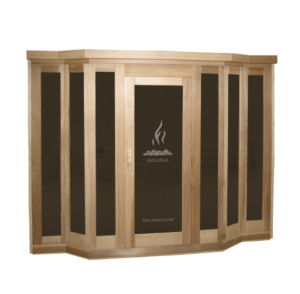
When you step into a traditional sauna, an electric or wood-burning heater warms a bed of sauna stones. As the room heats up, the warmth surrounds you from every direction. You can also pour water over the stones to create a burst of steam, adding humidity and making the heat feel more intense.
What Is a Dual Sauna?
A dual sauna gives you two heat experiences in one custom system: traditional sauna heat and infrared heat.
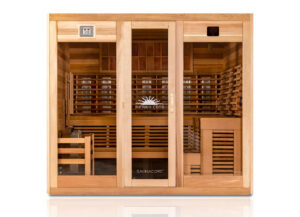
You still get the high-temperature room heat of a traditional sauna. But you also get infrared emitters, which use radiant heat to warm your body more directly at lower room temperatures. That gives you more control over how each session feels.
Traditional vs. Dual Sauna: Key Differences
The main difference comes down to how you want the heat to feel.
A traditional sauna gives you one primary experience: high-temperature, full-room heat. The heater warms the entire sauna, creating an intense environment that surrounds your body from every direction. If you want the classic sauna ritual, this is the more direct choice.
A dual sauna gives you more control. You still get traditional sauna heat, but you also get infrared heat. That means you can choose a hotter, more immersive session when you want intensity, or a lower-temperature infrared session when you want something gentler.
The experience is different, too. In a traditional sauna, the room itself does most of the work. You feel the heat in the air, on the benches, and through the steam when water is added to the stones. In a dual sauna, you can still use that traditional heat, but you can also rely on infrared emitters that warm your body more directly.
The design and investment can also differ. A traditional sauna is usually the simpler system. A dual sauna adds more components, more functionality, and more flexibility, which can make it a stronger fit if you want your sauna to support different routines over time.
In simple terms: choose a traditional sauna if you want the classic high-heat experience. Choose a dual sauna if you want that same traditional experience with the added option of infrared heat.
Which Sauna Best Fits Your Wellness Goals?
Your wellness goals should guide the system you choose.
If your goal is deep heat and an intense sweat, a traditional sauna is likely the better fit. It gives you the high-temperature environment, heated stones, and full-room heat that define the classic sauna experience. This is the option to consider if you want each session to feel immersive, powerful, and rooted in traditional sauna bathing.
If your goal is flexibility, a dual sauna may be the better choice. You can use traditional heat when you want intensity, then switch to infrared when you want a lower-temperature session. That makes it useful if your sauna routine changes from day to day.
If you are building a sauna for post-workout recovery, both systems can work. A traditional sauna gives you stronger ambient heat after training. A dual sauna gives you more control over the session, which may be useful when you want heat exposure without the same level of intensity.
If your goal is daily relaxation, think about what you will actually use most often. Some people want the full ritual every time. Others want a gentler option they can use more casually. Your best sauna is the one you will use consistently.
If your sauna will be shared by a spouse, family, or guests, a dual sauna can offer an advantage. Not everyone has the same heat tolerance. A dual system gives different users more ways to enjoy the space.
If you want a classic cottage, backyard, or spa-style retreat, a traditional sauna remains a strong choice. If you want a more adaptable home wellness system, a dual sauna gives you broader functionality in one custom room.

Custom Design Factors to Consider
Before you choose between a traditional sauna and a dual sauna, you need to think about how the system will fit your space, your routine, and the way you want to use it long term.
Start with location. Are you building your sauna indoors, outdoors, in a basement, inside a home gym, beside a pool, or at a cottage? A traditional sauna can work well in almost any of these settings, especially if you want a classic spa or retreat-style experience. A dual sauna can also work in many spaces, but it may require more planning because you are integrating both traditional and infrared heating components.
Next, think about size. How many people will use the sauna at once? If you want a private one- or two-person wellness space, your design needs will be different from a larger family sauna or social sauna. The size of the room affects heater selection, bench layout, electrical planning, ventilation, and overall comfort.
You should also consider how often you plan to use the sauna. If you expect longer, high-heat sessions, a traditional system may give you exactly what you need. If you want shorter sessions, lower-temperature options, or different heat settings for different users, a dual sauna may offer more flexibility.
Finally, think beyond the first session. A custom sauna should be designed around how you will use it for years, not just what sounds appealing today. The right system should fit your wellness goals, your home, and the people who will use it most.
Build Your Custom Sauna Around Your Lifestyle
A custom sauna should not force you into a standard experience. It should reflect how you want to use heat, how your space is built, and what kind of wellness routine you want to create.
Saunacore offers both traditional and dual sauna systems, along with custom design options that allow you to shape the final build around your needs. Whether you want the focused simplicity of a traditional sauna or the added flexibility of a dual system, Saunacore can help you plan a sauna that fits your home, cottage, or wellness space.
The best choice is not the most complex system. It is the system you will use consistently, comfortably, and for years to come. Contact us to learn more.